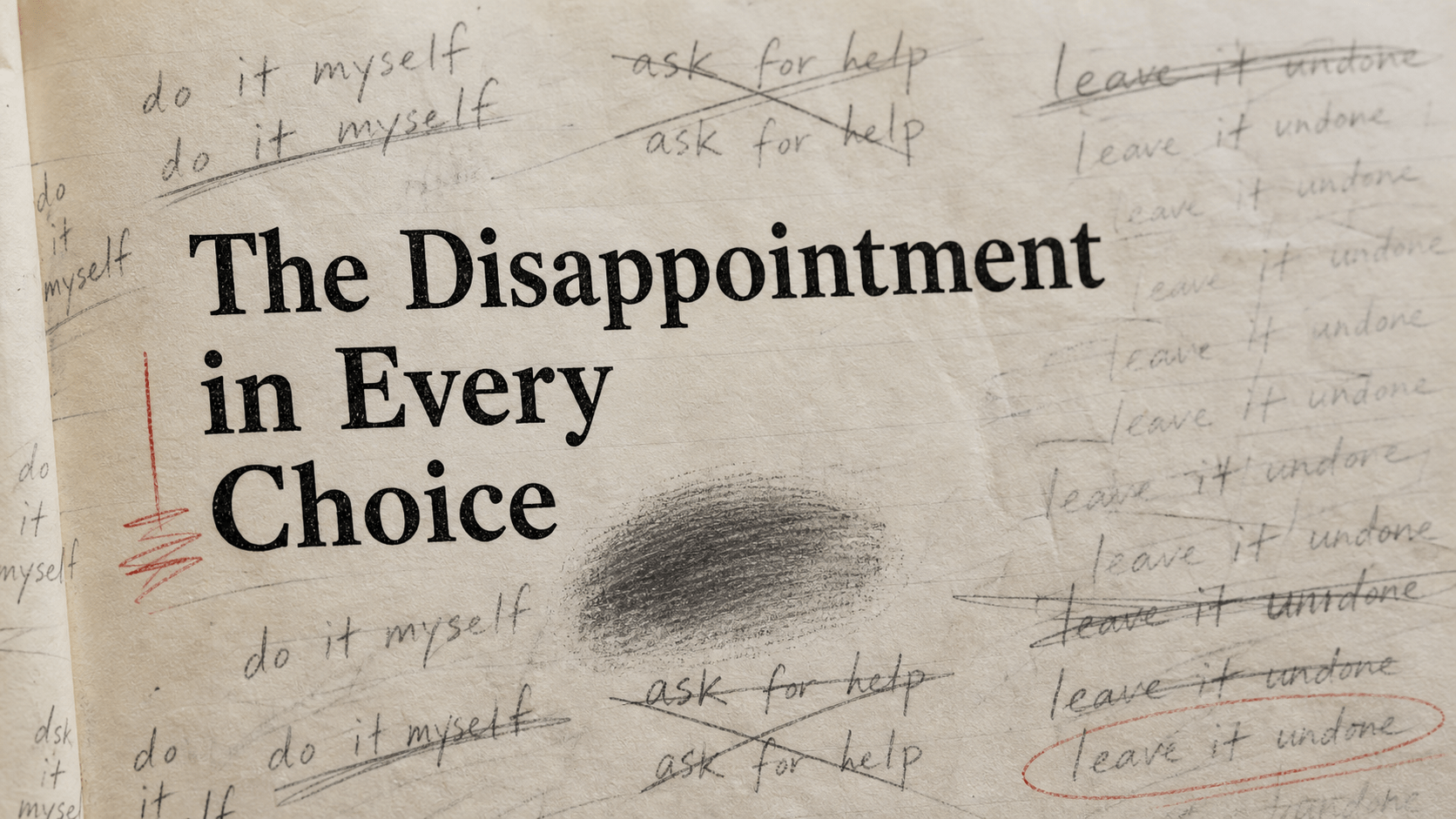
The options seem simple: do it yourself, ask for help, or accept the disappointment that no one else will just handle it.
But none of these options offers real relief.
Doing it yourself means carrying the work. Asking for help means carrying the vulnerability of asking, the effort of explaining, and often the responsibility of following up. Leaving it undone means carrying the consequences and the disappointment of watching no one notice or step in.
That is where the anxiety begins.
It is not only the weight of what needs to be done. It is the weight of evaluating every option while knowing that each one leaves something to carry: the task, the request, the management, the consequences, or the disappointment.
Even asking for help can become another form of labor. When one person must identify the need, assign the task, explain it, monitor it, and ensure that it gets finished, responsibility has not truly been shared. The work has only changed shape.
What is wanted is not simply assistance. It is the relief of someone else noticing, understanding, and taking ownership without needing to be managed. It is the experience of knowing something will be handled without one person’s attention holding everything together.
When that does not happen, disappointment becomes more than a passing feeling. It creates the problems that appear later.
Repeated disappointment becomes resentment. Letting go begins to feel dangerous, so control takes its place. Asking becomes associated with vulnerability and frustration, so hyper-independence feels safer. Withdrawal offers protection from being let down again. Even genuine help becomes difficult to trust.
From the outside, these reactions may look like the problem: controlling behavior, emotional distance, an unwillingness to delegate, or an insistence on doing everything alone. But they often began as adaptations to an earlier realization. If the responsibility is not carried personally, it may not be carried at all.
Eventually, anxiety arrives before the disappointment.
The moment something needs attention, every possible outcome is already present. Handle it alone and feel disappointed that no one else did. Ask for help and risk being disappointed by the response or by how much work the help requires. Leave it alone and risk discovering that no one will step in.
Disappointment is not merely one possible outcome. It is built into every option.
The real question is no longer, “How will this get done?”
It becomes, “Which version of carrying it is bearable today?”
That is the deeper weight. No matter which option is chosen, the same person may still be left holding the work, the responsibility, the consequences, or the disappointment.
After enough repetitions, the issue is no longer whether the burden can be handled. It usually can.
The issue is what handling it repeatedly teaches someone to expect from other people, and what that expectation slowly makes them become.

